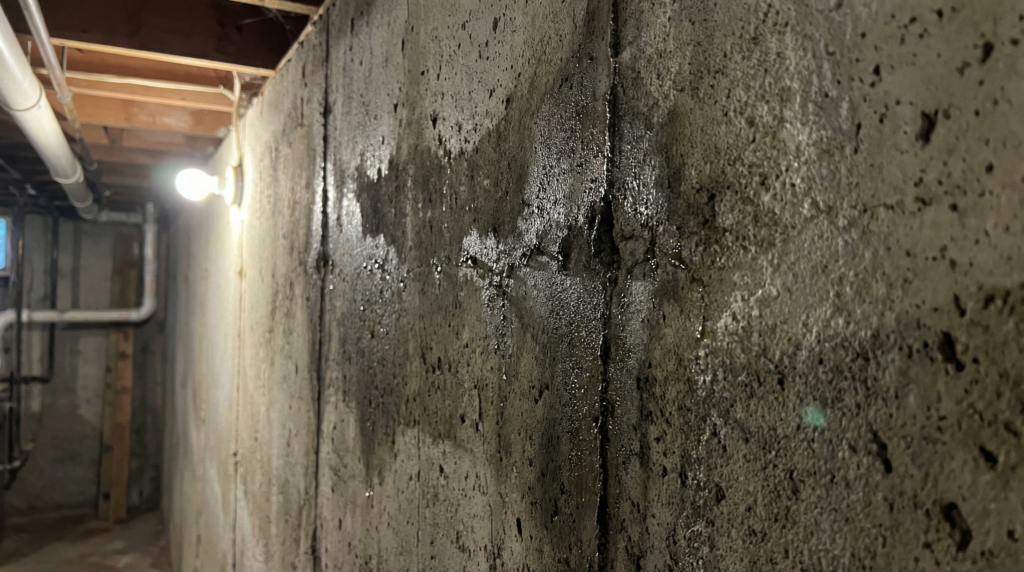

Basement waterproofing protects your home from water damage, mold, and foundation problems. If your basement leaks, smells musty, or shows water stains, you need to fix the problem before finishing the space. This guide explains how interior and exterior waterproofing methods work, what each costs in the Greater Toronto Area, and which approach makes sense for your situation.
Water in your basement is not just annoying. It destroys finishes, causes mold, and can weaken your foundation over time. Understanding how waterproofing works helps you make the right decision. If you are already dealing with water damage, start with our basement leak repair guide for Vaughan homeowners.
How Basement Waterproofing Works: Two Approaches
There are two main ways to waterproof a basement: from the inside or from the outside. Each method works differently and costs differently.
- Interior waterproofing: Manages water that has already entered your basement. It directs water to a drain and pumps it out.
- Exterior waterproofing: Stops water before it reaches your foundation. It creates a barrier on the outside of your walls.
Neither method is "better" in all cases. The right choice depends on your water source, foundation type, budget, and whether your basement is already finished.
Interior Basement Waterproofing
Interior waterproofing works from inside your basement. Instead of stopping water at the source, it collects water that enters and removes it before it causes damage.
How Interior Waterproofing Works
The most common interior system is a French drain (also called a perimeter drain or weeping tile system). Here is the process:
- Break up the floor: Contractors remove a strip of concrete around the perimeter of your basement, about 12 inches from the wall.
- Dig a trench: A trench is dug below the floor level, deep enough to catch water before it rises.
- Install drain pipe: Perforated pipe is laid in the trench, surrounded by gravel for drainage.
- Connect to sump pit: The drain pipe leads to a sump pit, usually in a corner of the basement.
- Install sump pump: A pump sits in the pit and automatically pumps water outside when it rises.
- Patch the floor: The concrete is poured back over the drain, leaving only the sump pit visible.
Some contractors also apply waterproof coatings or membranes to the interior walls. These sealers help with minor dampness but do not stop active water leaks.
Interior Waterproofing Costs (2025 Ontario)
| Item | Cost Range |
|---|---|
| Per linear foot (full system) | $50 to $180 |
| Per square foot | $3 to $10 |
| Typical 1,000 sq ft basement | $3,000 to $10,000 |
| Sump pump installation | $565 to $3,500 |
| Battery backup sump | $500 to $1,500 |
Pros of Interior Waterproofing
- Lower cost: 30 to 50 percent cheaper than exterior methods
- No exterior excavation: Your yard, driveway, and landscaping stay intact
- Works in any weather: Can be done year-round, even in winter
- Good for finished basements: Less disruption if your basement is already done
- Quick installation: Most jobs finish in 2 to 4 days
Cons of Interior Waterproofing
- Does not stop water at the source: Water still enters your foundation
- Requires maintenance: Sump pumps need regular testing and replacement every 7 to 10 years
- Power dependent: If the power goes out during a storm, you need a battery backup or generator
- Less effective against heavy water pressure: Severe water problems may overwhelm interior systems
Exterior Basement Waterproofing
Exterior waterproofing stops water before it reaches your foundation walls. This is the more permanent solution, but it costs more and requires major excavation.
How Exterior Waterproofing Works
- Excavate around the foundation: Crews dig down to the footing level around your entire home or the affected section. In the GTA, this means digging 5 to 8 feet deep. For more on the excavation process, see our guide to digging out a basement.
- Clean and repair the wall: The exposed foundation is cleaned, and any cracks are repaired with hydraulic cement or epoxy injection.
- Apply waterproof membrane: A thick waterproof coating or membrane is applied to the exterior wall. This creates a barrier that water cannot penetrate.
- Install drainage board: A dimpled drainage mat is placed over the membrane. This directs water down to the drainage system.
- Replace or add weeping tile: New perforated pipe is installed at the footing level to collect water and direct it away from the foundation.
- Backfill and grade: The excavation is filled with gravel and soil, graded to slope away from the house.
Exterior Waterproofing Costs (2025 Ontario)
| Item | Cost Range |
|---|---|
| Per linear foot (full system) | $100 to $350 |
| Per square foot | $6 to $15 |
| Typical 1,000 sq ft basement | $10,000 to $35,000 |
| One wall only | $5,000 to $12,000 |
| Foundation crack repair | $1,500 to $3,200 |
Pros of Exterior Waterproofing
- Stops water at the source: Water never touches your foundation wall
- Long lasting: A proper exterior system lasts 25 years or more
- Protects your foundation: Prevents water damage to the structure itself
- Best for severe water problems: Handles high water tables and heavy rain
- Adds value: Buyers appreciate exterior waterproofing on home inspections
Cons of Exterior Waterproofing
- High cost: Two to three times more expensive than interior methods
- Major excavation: Your yard, landscaping, deck, or walkways may be damaged
- Weather dependent: Cannot be done in frozen ground or heavy rain
- Longer timeline: Projects take 1 to 2 weeks depending on the scope
- Access challenges: Attached homes or tight lots may not allow full excavation
Interior vs Exterior: Which Should You Choose?
| Factor | Interior | Exterior |
|---|---|---|
| Cost | $3,000 to $10,000 | $10,000 to $35,000 |
| Lifespan | 5 to 15 years (pump dependent) | 25+ years |
| Disruption | Low (inside work only) | High (excavation required) |
| Timeline | 2 to 4 days | 1 to 2 weeks |
| Best for | Minor leaks, finished basements | Severe water, structural protection |
Choose interior waterproofing if: You have a tight budget, your basement is already finished, exterior access is limited, or you only have minor dampness and occasional leaks.
Choose exterior waterproofing if: You have persistent flooding, visible foundation cracks, an unfinished basement you plan to renovate, or you want a permanent solution that protects your foundation long-term.
Municipal Rebates in the GTA
Several GTA municipalities offer rebates for basement flood prevention. These programs help offset the cost of waterproofing.
| Municipality | Rebate |
|---|---|
| Toronto | Up to $1,750 for sump pumps, $1,250 for backwater valves (Toronto rebate program) |
| Peel Region | Up to $2,750 for sump pumps and backwater valves combined |
| York Region | Varies by municipality. Homeowners in King City and Caledon should check with their local offices |
Most rebate programs require professional installation and permits. The Canada Mortgage and Housing Corporation (CMHC) provides additional guidance on basement moisture management. Ask your contractor to provide the documentation needed for rebate applications.
Signs You Need Basement Waterproofing
Do not wait for a flood. These warning signs indicate water problems:
- Water stains on walls or floor: White mineral deposits (efflorescence) or brown stains indicate past water
- Musty smell: That basement smell is usually mold or mildew from excess moisture
- Visible mold: Black, green, or white fuzzy growth on walls, ceiling, or belongings
- Peeling paint: Paint bubbling or flaking off concrete walls
- Damp or wet floor: Water pooling after rain or during spring thaw
- Foundation cracks: Horizontal cracks are especially concerning and need professional assessment
- High humidity: Readings above 60% indicate moisture infiltration
Do not finish a wet basement: Installing drywall, flooring, or insulation over a water problem guarantees mold, damaged materials, and costly rework. Fix the water first.
Summary
Interior and exterior waterproofing solve the same problem in different ways. Interior systems manage water that enters your basement, collecting it in drains and pumping it outside. Exterior systems stop water before it reaches your foundation. Interior costs less and works well for minor problems. Exterior costs more but provides permanent protection.
For GTA homeowners, the best approach depends on the severity of your water problem, your budget, and whether you plan to finish your basement. Either way, professional basement waterproofing protects your home from damage and makes your basement usable.
Dealing with a wet basement? We assess water problems and recommend the right waterproofing approach for your situation. Our team serves homeowners across Vaughan, King City, Caledon, Aurora, and the Greater Toronto Area.
Frequently Asked Questions
You can apply interior sealers and coatings yourself, but these only help with minor dampness. Installing a French drain requires breaking concrete and plumbing knowledge. Exterior waterproofing requires excavation equipment. For anything beyond basic sealing, hire a professional. DIY mistakes often cost more to fix than doing it right the first time.
Exterior waterproofing with a proper membrane lasts 25 years or more. Interior systems depend on your sump pump, which typically lasts 7 to 10 years. Interior wall coatings may need touch-ups every 5 to 10 years. The drainage components of interior systems can last decades if properly installed.
If your basement has been dry for years, you may not need a sump pump. However, water tables can change over time, and heavy storms can overwhelm even dry basements. Many homeowners install sump pumps as insurance when finishing their basement, even without a history of water problems.
Waterproofing prevents water from entering through cracks, but it does not repair structural damage. Cracks should be repaired before or during waterproofing. Exterior waterproofing includes crack repair as part of the process. For interior systems, cracks are usually injected with epoxy or polyurethane before installing the drainage system.
A backwater valve prevents sewage from backing up into your basement during heavy rain. It is installed on your main sewer line and closes automatically if water tries to flow backward. Many GTA municipalities offer rebates for backwater valve installation. This is different from waterproofing but often done at the same time.
Yes. If water only enters from one side of your basement, you can waterproof just that wall. This is common when one side faces a slope or retaining wall. Partial exterior waterproofing costs $5,000 to $12,000 depending on the wall length and access conditions.
Standard home insurance typically does not cover groundwater seepage or gradual water damage. Some policies cover sudden events like burst pipes. Overland flood coverage is available as an add-on but does not cover foundation leaks. Check your policy carefully. Waterproofing is considered home maintenance, not an insurable event.
A professional assessment is the best way to know. In general, occasional dampness or minor leaks after heavy rain can be managed with interior systems. Persistent flooding, water entering through cracks, or visible foundation damage typically requires exterior work. If you plan to finish your basement, consider exterior waterproofing for long-term protection.