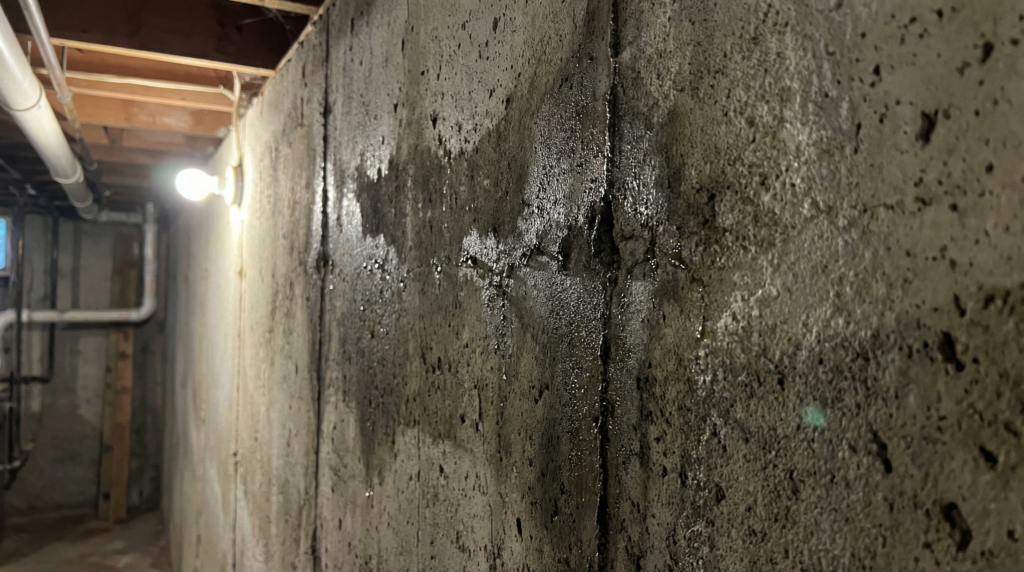

Finishing a wet basement is one of the most expensive mistakes homeowners make. Water destroys drywall, ruins flooring, and grows mould behind your walls where you cannot see it. Before you spend $30,000 to $80,000 on a basement renovation, you need to know if your basement has moisture problems and how to fix them.
The Bottom Line: About 60 percent of basements have moisture problems. If your basement has any history of water, musty smells, or visible signs of dampness, waterproofing should happen before you frame a single wall. Skipping this step can cost you tens of thousands in repairs later.
Why Waterproofing Comes Before Finishing
Water finds every gap, crack, and weakness in your foundation. Once you cover concrete walls with insulation, framing, and drywall, you cannot see water coming in until the damage is done.
What Happens When You Finish a Wet Basement
- Mould growth: Moisture behind walls creates perfect conditions for mould. You might not see it for months or years, but it affects your air quality and health.
- Drywall damage: Wet drywall swells, stains, and crumbles. It has to be torn out and replaced.
- Flooring failure: Even moisture-resistant flooring fails when water sits underneath it. Subfloors rot and warp.
- Insulation problems: Wet insulation loses its ability to insulate and becomes a breeding ground for mould.
- Structural damage: Long-term moisture weakens wood framing and can cause foundation problems.
Repairing water damage in a finished basement often costs more than the original renovation. You have to tear everything out, fix the water problem, then rebuild from scratch.
Signs Your Basement Needs Waterproofing
Some signs are obvious. Others require closer inspection. Check for these before you start any finishing work.
Clear Warning Signs
- Water pooling on the floor after rain
- Visible water stains on walls or floor
- Active leaks or seepage through cracks
- Musty or damp smell
- Visible mould or mildew
- Peeling paint on concrete walls
Less Obvious Signs
- Efflorescence: White powdery deposits on concrete. This is salt left behind when water evaporates and indicates moisture moving through your foundation.
- Humidity over 60 percent: Use a hygrometer to measure. High humidity means moisture is entering from somewhere.
- Condensation on pipes or windows: This shows excess moisture in the air.
- Rust stains: On concrete or metal items stored in the basement.
- Insects: Certain bugs like silverfish and centipedes thrive in damp environments.
Important: A dry basement today does not mean a dry basement forever. Heavy spring rains, changing water tables, and blocked drains can cause problems years after you move in. If your home is more than 15 years old, have a professional assess your foundation before finishing.
Waterproofing Options and Costs
There are two main approaches: interior waterproofing and exterior waterproofing. Each has its place depending on your situation and budget.
Interior Waterproofing
Interior systems manage water that gets into your basement rather than preventing it from entering. This approach works well for minor seepage and is less disruptive than exterior work.
| Solution | Cost | Best For |
|---|---|---|
| Interior drainage channel | $3,000 to $10,000 | Managing seepage along walls |
| Sump pump installation | $1,500 to $4,000 | Removing collected water |
| Crack injection | $300 to $600 per crack | Sealing foundation cracks |
| Vapour barrier on walls | $2,000 to $4,000 | Controlling moisture vapour |
Exterior Waterproofing
Exterior waterproofing stops water before it reaches your foundation. This is the most effective long-term solution but requires excavating around your house.
| Solution | Cost | Best For |
|---|---|---|
| Exterior membrane and drainage | $15,000 to $35,000 | Serious water problems |
| Weeping tile replacement | $10,000 to $25,000 | Failed or clogged drainage |
| Grading and drainage improvements | $2,000 to $8,000 | Surface water issues |
For a complete explanation of methods and when to use each, read our detailed guide on how basement waterproofing works.
What Questions to Ask a Waterproofing Contractor
Not all waterproofing companies are the same. Ask these questions before hiring anyone.
- Are you licensed, bonded, and insured?
- How long have you been in business?
- Can you provide references from jobs done 3 or more years ago?
- What warranty do you offer and what does it cover?
- What is your recommended solution for my specific problem?
- Will this require excavation? How much?
- Do you handle permits if needed?
- What happens if the problem comes back?
Be cautious of companies that offer one-size-fits-all solutions without properly inspecting your basement. The right solution depends on where water is coming from and why.
When You Can Skip Waterproofing
Not every basement needs major waterproofing work. You might be able to proceed with finishing if:
- Your basement has been completely dry for many years
- You have no signs of moisture, stains, or efflorescence
- Your home has proper grading that directs water away from the foundation
- Gutters and downspouts are in good condition and discharge far from the house
- A professional inspection confirms no moisture issues
Even in dry basements, good practice includes a vapour barrier on exterior walls and using moisture-resistant materials like vinyl plank flooring.
The Cost of Getting It Wrong
Skipping waterproofing to save money usually costs more in the end. Here is a real comparison.
| Scenario | Cost |
|---|---|
| Interior waterproofing before finishing | $5,000 to $12,000 |
| Basement finishing | $40,000 to $60,000 |
| Total (done right) | $45,000 to $72,000 |
| Scenario (skipped waterproofing) | Cost |
|---|---|
| Basement finishing | $40,000 to $60,000 |
| Water damage repair (tear-out) | $10,000 to $25,000 |
| Mould remediation | $3,000 to $10,000 |
| Waterproofing (after the fact) | $8,000 to $15,000 |
| Rebuilding damaged areas | $15,000 to $30,000 |
| Total (done wrong) | $76,000 to $140,000 |
The math is clear. Waterproofing first saves money, time, and stress.
Get Your Basement Assessed Before Finishing
Revival Construction assesses every basement before starting a renovation project. We check for moisture issues, foundation cracks, and drainage problems so you know exactly what needs to happen before finishing. Our team serves Newmarket, Aurora, Bradford, and communities throughout York Region.
Frequently Asked Questions
If your basement has any signs of moisture, yes. Water stains, musty smells, efflorescence, or a history of leaks all require waterproofing before you finish. Even if your basement seems dry, a professional assessment is smart for older homes. Skipping waterproofing on a problem basement leads to mould, damaged finishes, and expensive repairs.
Interior waterproofing with drainage and a sump pump costs $5,000 to $15,000 for most homes. Exterior waterproofing with membrane and weeping tile costs $15,000 to $35,000 depending on access and foundation size. Crack injection runs $300 to $600 per crack. The right solution depends on where your water problem is coming from.
Efflorescence is the white powdery substance you see on concrete walls. It happens when water moves through concrete, dissolves minerals, and leaves salt deposits when it evaporates. Efflorescence itself is harmless, but it indicates moisture is moving through your foundation. You should address the moisture source before finishing your basement.
Exterior waterproofing is more effective because it stops water before it reaches your foundation. However, it costs more and requires excavation. Interior waterproofing manages water that gets in and works well for minor seepage. Many homes use a combination of both. The right choice depends on your specific water problem and budget.
No. Even occasional dampness will eventually damage finished walls and flooring. Moisture creates conditions for mould growth, which can happen behind walls where you cannot see it. Fix the moisture problem first, then finish. The cost of waterproofing is much less than tearing out and rebuilding a damaged basement.