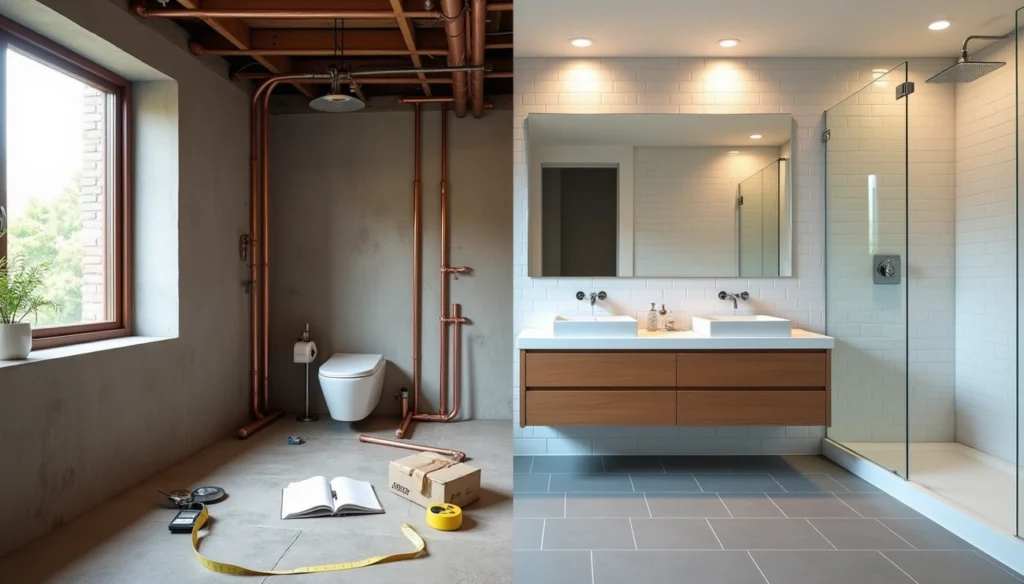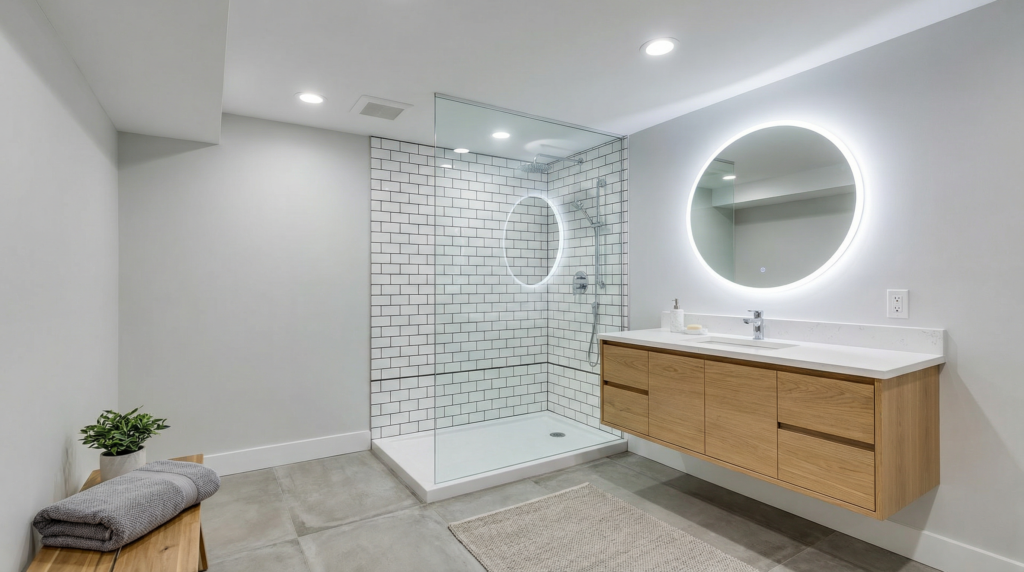

Did you know that a bathroom renovation can revolutionise your home’s comfort level and boost its resale value?
Setting a clear budget is the first step before exploring bathroom renovation ideas. Most homeowners want to update their outdated bathroom designs into modern, functional spaces, but the average renovation costs can vary based on your plans. These renovations are definitely worth the investment if you execute them properly.
The renovation process needs many crucial decisions about layout changes and material choices. Proper planning helps avoid unexpected issues, especially in older homes where problems hide behind walls. Getting quotes from multiple companies remains one of the best ways to estimate your total renovation costs.
This piece will guide you through everything in planning your bathroom renovation and help you save money along the way. Our tips will help you get the best value without extra expenses, whether you plan to completely gut your bathroom or make selective updates.
Assess Your Space and Set a Realistic Layout
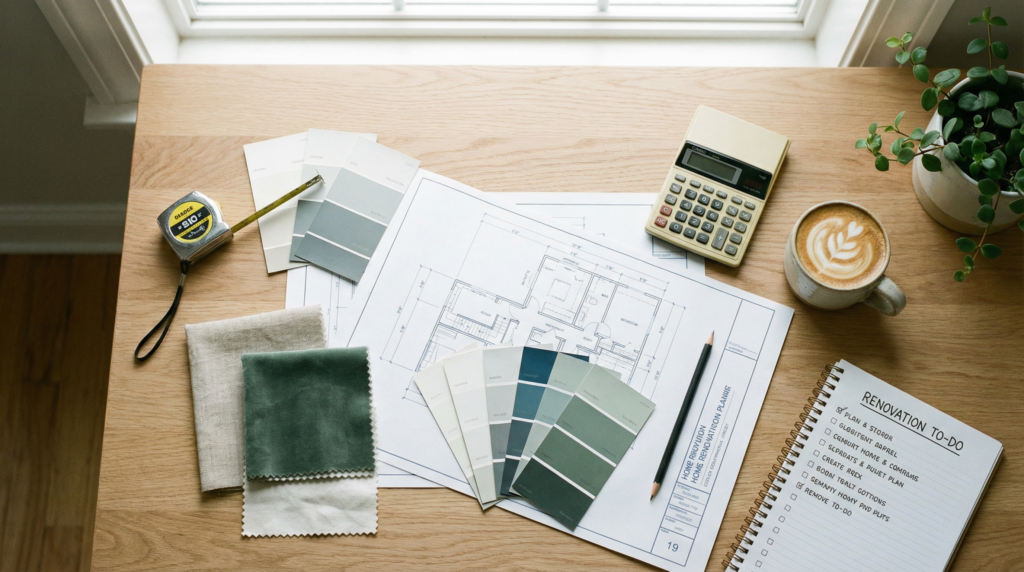
A full picture of your existing space sets the foundation for a successful bathroom renovation. You can save thousands of pounds by taking accurate measurements and planning your layout carefully.
Measure your bathroom dimensions
Your dream bathroom design starts with precise measurements. Create a detailed floor plan with measurements in inches or millimetres. Measure the full width of each wall from corner to corner. The plan should also show windows, doors, and fixed elements like vents or registers.
To get a complete measurement plan:
Measure ceiling height in multiple locations throughout the room
Note plumbing locations relative to nearest walls
Mark electrical outlets and switches
Show whether sink drains go into the floor or wall
Standard fixture dimensions play a key role in your planning. A standard bathtub measures 2ft 6in by 5ft (76cm by 152cm), while a functional shower needs at least 2ft 6in square (76cm) of space.
Decide what stays and what goes
Take time to review what works in your bathroom and what needs to change. Look for problems like insufficient storage, poor lighting, or awkward cabinet placement.
Measure the height, width, and depth of any features you plan to keep. This becomes crucial when you’re not replacing flooring, as new fixtures must cover the same footprint as the old ones. Keeping fixtures where they are can help cut down renovation costs. Moving plumbing connections gets pricey and adds to your bathroom renovation budget.
Sketch your ideal layout
After getting all measurements, explore different layout options to make the most of your space. Digital bathroom planning tools help you see potential arrangements. Your bathroom should have distinct wet and dry zones, with proper waterproofing in shower/bath areas.
Small bathrooms work well with space-saving fixtures. Wall-mounted toilets or narrower vanity units (30cm depth instead of standard 50cm) can help. You’ll end up with a better result if you avoid overcrowding – an open layout makes your bathroom look larger and more luxurious than one stuffed with fixtures.
Create a Budget and Understand Bathroom Renovation Cost
“The average cost of a bathroom renovation in her area is anywhere from $15,000 to $20,000, but it could easily surpass that when dealing with larger spaces, more expensive homes, or higher-quality materials.” — Sherry Wiggs, Top real estate agent
Your bathroom renovation’s success depends on understanding its financial aspects. A realistic budget helps you make informed decisions and prevents things from getting pricey along the way.
How much to renovate a bathroom in 2026?
Bathroom renovation costs change based on your project scope and location. Standard projects in major cities cost between CAD 16,720 and CAD 41,800. Simple refreshes on compact spaces start around CAD 11,146. Luxurious custom remodels with spa-like features can reach CAD 97,535 or more.
Your bathroom’s size affects your budget significantly:
Small bathrooms (under 40 sq ft): CAD 12,540 to CAD 19,507
Average-sized bathrooms: CAD 20,900 to CAD 29,260
Master suites/Large bathrooms: CAD 36,227 to CAD 58,521
The renovation depth changes pricing substantially. A simple update with new paint, fixtures, and minor changes runs between CAD 6,966 and CAD 13,933. Mid-range renovations with new tiling, upgraded fixtures, and some layout changes cost from CAD 20,900 to CAD 27,867. High-end renovations with custom work and premium materials start at CAD 41,800.
Breakdown of typical bathroom renovation price
Your bathroom budget covers these key components:
Demolition and disposal: CAD 1,393 – CAD 2,090
Plumbing: CAD 975 – CAD 4,180
Electrical/lighting: CAD 697 – CAD 2,787
Tiles and flooring: CAD 2,090 – CAD 5,573
Shower/bathtub: CAD 1,332 – CAD 3,469
Vanity and cabinets: CAD 1,672 – CAD 6,967
Toilet installation: CAD 839 – CAD 1,771
Sink installation: CAD 578 – CAD 968
Skilled labour makes up to 60% of your renovation investment. Finding qualified professionals is vital. Labour costs range from CAD 69-209 per hour based on the contractor and project complexity.
Set aside a buffer for unexpected costs
Smart homeowners set aside 10-20% of their total renovation budget as a contingency fund. This buffer helps because bathroom renovations often uncover hidden issues once walls open up, like outdated wiring, mould, or water damage. This financial cushion gives you peace of mind and helps handle unexpected challenges.
Choose Materials and Fixtures That Save Money
Smart material and fixture choices can transform your bathroom renovation budget without compromising style or quality.
Compare tile and flooring options
Your bathroom flooring selection should include affordable yet durable options. Vinyl costs as little as CAD 2.09 per square foot. A modern look comes from epoxy flooring, which starts at CAD 4.18 per square foot and resists water exceptionally well. Ceramic tiles make a practical choice, with simple options ranging from CAD 1.39 to CAD 4.18 per square foot.
You can maximise tile value by:
Creating patterns with affordable ceramic tiles instead of designer options
Installing larger tiles to minimise grout lines and cleaning time
Using budget-friendly tiles throughout rather than expensive accents
Pick affordable vanities and toilets
Material and construction quality drive vanity prices significantly. MDF vanities cost less than solid wood versions, and quality bathroom vanities start around CAD 445.86.
Money-saving options include:
Keeping plumbing fixtures where they are to avoid pricey relocations
Adding new hardware to existing vanities to refresh the look affordably
Selecting chrome fixtures instead of nickel for a similar look at a lower cost
Use leftover stone or remnant slabs
Remnant slabs help you get premium materials without the premium price tag. These pieces left over from bigger projects fit bathroom-sized installations perfectly. The advantages include:
Remnants typically sell for less than full slabs
Small bathroom vanities and shower niches work well with these sizes
You get high-end looks despite paying less
Shop online for deals on hardware
Smart shopping helps you find affordable bathroom hardware. Home improvement stores often run sales on bath accessories, toilets, and vanities. Your options include:
New handles, towel bars, and mirrors to refresh the space economically
Matching finishes throughout to create a cohesive look
Choosing a single stunning focal point to anchor your design effectively
Plan the Renovation Timeline and Hire the Right Help
“While doing some tasks yourself can save on labour costs, complex tasks like plumbing, electrical work, or intricate tiling should be handled by licenced professionals to ensure safety, compliance with codes, and quality.” — Renovation Expert
Your bathroom renovation needs perfect timing and the right professionals. A detailed schedule is a vital step toward success.
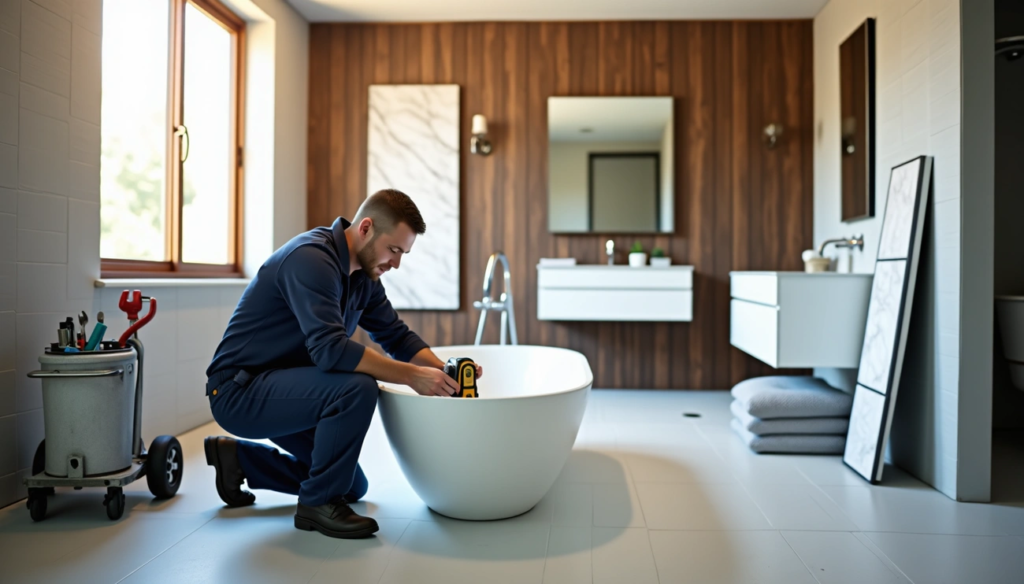
When to schedule demolition and plumbing
A complete bathroom renovation takes six weeks to three months from start to finish. The actual construction needs 20-30 working days. The project works best when divided into clear phases:
Planning and design: 1-4 weeks
Ordering and delivery: 1-8 weeks
Construction: 2-4 weeks
Finishing: 2-3 days
The physical renovation begins with demolition that takes 1-2 days. Rough plumbing and electrical work need 3-5 days. Framing, insulation, and drywall follow and take 2-3 days.
How to find a reliable contractor
Quality results come from comparing three to five quotes from different contractors. Each proposal should include:
Detailed cost breakdown
Specific timeline with completion dates
Clear scope of work
Material quality specifications
Warranty information
Check at least three references from past projects. A contractor’s initial response time often shows how responsive they’ll be throughout the project.
DIY vs professional: what to do yourself
You might want to think about handling simpler tasks like demolition, painting, or minor finishing work yourself. Complex projects should stay with professionals. DIY work can save money upfront but takes longer and might stretch across several weekends. Professional teams finish faster because of their experience. Your choice should balance your budget, skills, and available time.
Conclusion
Bathroom renovations can change your living space and add substantial value to your property. This guide explores proven strategies to plan a successful bathroom renovation that won’t drain your wallet.
Quality measurements and smart layout planning are the foundations of any successful project. You can substantially reduce plumbing costs by keeping fixtures where they are, which frees up money for other improvements. The biggest challenge is managing the budget; a 10-20% contingency fund will protect you from surprises, particularly in older homes.
The right material choices make a big impact. Vinyl flooring and ceramic tiles provide durability and style without premium costs. Remnant stone slabs are a great way to get luxury materials at lower prices. Finally, choosing between professional help and DIY depends on your skills and timeline, but complex plumbing always needs expert hands.
These strategies will help you begin your renovation with confidence, creating a space that offers both beauty and function.
Frequently Asked Questions
How much should I budget for a bathroom renovation in 2025?
The cost of a bathroom renovation in 2025 can vary widely. For a standard project in a major city, you might expect to spend between CAD 16,720 and CAD 41,800. However, budget-friendly refreshes can start from around CAD 11,146, while luxurious custom remodels could reach CAD 97,535 or more.
What are some cost-effective flooring options for a bathroom?
Affordable yet durable flooring options include vinyl, which can cost as little as CAD 2.09 per square foot. Epoxy flooring is another modern option starting from CAD 4.18 per square foot. Ceramic tiles remain a practical choice, with basic options starting around CAD 1.39 to CAD 4.18 per square foot.
How long does a typical bathroom renovation take?
A complete bathroom renovation typically spans six weeks to three months from planning to completion. The actual construction phase usually takes about 20-30 working days, with demolition taking 1-2 days, rough plumbing and electrical work requiring 3-5 days, and framing, insulation, and drywall installation taking 2-3 days.
Should I hire a professional or attempt a DIY bathroom renovation?
The decision between DIY and professional renovation depends on your skills, budget, and available time. While handling simpler tasks like demolition or painting yourself can save money, complex projects like plumbing or electrical work are best left to professionals. Professional renovations are typically completed faster, but DIY projects can be more cost-effective if you have the necessary skills and time.
How can I save money on bathroom fixtures and materials?
To save money on fixtures and materials, consider using affordable ceramic tiles in creative patterns, opting for larger tiles to reduce grout lines, and using remnant stone slabs for vanities and shower niches. You can also update hardware on existing vanities, choose chrome fixtures instead of nickel, and shop online for deals on accessories. Keeping plumbing fixtures in their original locations can also significantly reduce costs.